


You’re reading Towards Embodied Living — a Substack exploring what becomes possible when we stop abandoning ourselves in order to live, lead and create.
It started the way most mornings start. Ordinary, at the sink washing dishes, Spotify on DJ mode, playing what it knows I love. The third song in, a K-pop Huntrix track I’ve listened to many times already, but today, with a soapy sponge in one hand, a cup in another, singing along in a croakily loud voice while shimmying on the spot, a line catches me mid-movement.
“My voice without the lies.
This is what it sounds like.”
I stopped. Not dramatically. Just—something settled. I dropped what I was holding, quickly ran a towel across my hands and reached for the phone to hit rewind:
I broke into a million pieces, and I can’t go back,
But now I’m seeing all the beauty in the broken glass.
The scars are part of me.
Darkness and harmony.
My voice without the lies.
This is what it sounds like.
Words I had sung so many times before, but this time it seemed to me that they were singing about visibility, not visibility as performance, but something more accurate, more human.
Not just about visibility as marketing strategy but about what it costs to be a woman, a Black woman, a human being moving through systems that require you to perform okayness in order to belong. I don’t know if they knew they were naming the fed-upness, the tiredness of performing perfection, the way we can lie to ourselves so completely that our own voice gets hidden beneath those lies until we can barely hear it anymore.
But they were. And I felt it. Standing at the sink, hands in water, body knowing before my mind did.
The recognition hit me because I had already been months into my own visibility experiment, not as strategy or how to show up more, but a question that I was beginning to orient around:
What would it mean to let myself be seen as I actually am?
As I actually am vs Visibility as we’ve been taught it
We were taught that visibility means more. More output. More consistency. More frequency. More productivity. Bigger. Louder. Bolder.
It is structural and it is structural. Visibility advice is built on more as a structure. But underneath it lies another structure, the one that holds the first up:
self-abandonment.
Running so quickly and delivering so consistently that you leave yourself behind in the process. And by the time you reach what you were running toward, you don’t even recognise what you’re seeing, who you are seeing or how you even got there.
I know this because I lived it. I’m not pointing outwards. I’ve lived this across distinct areas of my life, my time in teaching, in relationships, in religion, in the quiet internal spaces where I kept overriding what I knew to be true in order to keep functioning.
It might be easy to chalk this up as a personal failing but if a line from a K-pop song can carry it, a multi-award-winning movie no less, and make people stop in recognition, then we must also see that this isn’t isolated to just one individual. It is, as one of the women in my community put it, the water we’re swimming in.
From how I made money to how I lived life, that water has impacted how I allowed myself to show up and be seen.
The service offer that finally felt like me
Let’s talk about business for a moment. Everything I had learned about marketing taught me that I needed an offer for someone to step into. So I kept creating them, modelling successful coaches (you know the ones). But it never really landed. Of course, I had people step into work with me, but 9 out of 10 times, it felt like just another gilded cage I had constructed because I had to.
Everything I created felt like I was filling a space because I was supposed to; it’s just what you do.
You make the offer.
You show up.
You produce.
But even though it never felt right, I bypassed the feeling. I echoed language from online “gurus”; I did my best to believe them when they said, “fake it till you make it,” “it’s a mindset issue,” “a confidence issue,” “a visibility issue.”
Eventually, my body just refused to build, but I didn’t stop writing.
And I think the writing began to save me because it gave me a chance to surface, to begin to pay attention and notice.
As my Substack grew, I had women reading my essays, feeling something speak to them, and reaching out, and I felt such a solid connection to my readers, and yet, when they clearly wanted a next step, the connection would dissolve.
Something else became visible then: I had no bridge; I couldn’t articulate what I did; I couldn’t say: this is me, this is the work I do, here is the door.
These encounters illuminated the gap between what my writing was holding and what I was offering, and I had no idea how to close it.
One of the conversations I see repeatedly around visibility, particularly viral visibility, is what to do when attention finally arrives. How to optimise it. How to capitalise on it. How to not miss the opportunity.
There is often a rush to package what is emerging. A rush to turn interest into an offer. A rush to be ready before something has fully taken shape.
But what I’ve noticed, both in myself and through my work as a Human-Centred Experience Designer, is that rushing to fill a gap rarely produces the work that genuinely wants to come through us.
I saw this for myself when I finally released The Embodied Living Circle (ELC). Honestly, it was like anything else I had ever “launched”: there was really no launch at all, which was probably more about what was going on inside me than something I would say was a strategy I hold to.
But what was really different was that I wasn’t trying to be something else, be someone else, and that was uncomfortably vulnerable.
The default mechanism to deal with discomfort is to pile on more things to prove enoughness: more bonuses, more add-ons, the bloat that accumulates when you’re not sure that what you’re actually offering is enough.
The circle was different because it was spacious. Sparse, even, I needed it to be that way. I could no longer tolerate launching something that extracted from me and denied my lived capacity in order to be seen as valuable.
It was asynchronous, with gentle weekly touchpoints built in.
And that has been, and continues to be, reconditioning for the ladies who have chosen to enter the space and for me.
There is a performance anxiety that we carry around, a need we have to prove value and worth, by constant doing and availability, especially, I think as women.
In the process of holding this space, I have had to learn to be comfortable with quietness in a whole new way. My own space, my own stillness, I know how to do that, but what happens when my nervous system, my own conditioning and socialisation bumps up against the space and stillness of others?
I am sure the ladies have felt it too, noticed it as I have, I mean, how could you not? The online world is full of constant noise and activity; taking breaks and going silent is seen as stepping back from visibility, which has meant we often rush past the fertile void gifted in the darkness.
There’s this saying, nature abhors a vacuum. I’ve always thought it meant that something will always rush to fill emptiness and silence, much like how we will often automatically move to fill space from our fear, but maybe in this context it means something else, maybe it means that nothing is ever truly empty, not even silence, stillness or space.
Because what I have noticed in myself, in the women in the circle, over nearly four months of being in the circle, is how much more visible we have become to ourselves and each other.
I can see it in how silence and stillness are normalising – speaking and sharing what feels honest and true, when it feels honest and true. I might not hear from anyone for days, but I trust that the space can hold in the quiet.
I can see it in the language being used, I am especially loving the I AM language that is unfolding, not the performance of affirmation, but a deeper grounded recognition, of “oh yes, this is me, I see this in me.”
I can see it in their writing, in their own reflections and body of work: there is power in their language, an authority, a steadiness that lives in their words; it has shifted not only what they say or do, but also how they say and do it.
And I can see it and feel it in myself.
How I learned to disappear
The opposite of visibility is invisibility; just writing that makes me stop and consider, because until recently I had been pursuing visibility without realising that I had first been invisible.
My leaning towards invisibility wasn’t a mindset problem or a confidence gap, it was something I learned in my body through lived experience—through relationships that required self-abandonment to survive, through workplaces that rewarded override, through religion that taught me to distrust my own knowing, through the accumulation of moments where I watched myself being looked past.
As a Black woman, I have felt this in a particular way. Time and again, I have experienced the dynamic of being lined up, as it were, alongside others with similar insights, similar depth, similar capacity just different skin colour, different genders, and being the one overlooked. Being the last chosen. Being invisible.
And slowly, I began to wear that invisibility.
My body learned from it; it learned it is safer not to fully claim myself, safer not to close the gap, safer not to stand and say, without apology, this is who I am and this is what I do.
Until one day I realised that I was ready, really ready to be seen, and that meant becoming visible to myself first.
That is why visibility, as I’ve come to understand it, is not primarily about being seen by others but about allowing myself to be seen as I am, and that starts with me.
You can probably see how this extends beyond business. Yes, being visible to myself has given me greater permission to honour what feels right and true to me, rather than performing visibility for an audience. But it’s also impacted so many other areas of my life, for example, shifts that I’m experiencing in my career and how I’m positioning myself to be seen because I can see myself in a way I couldn’t before.
If someone were to ask me what happened, what enabled me to make these shifts, I would say exactly what ELC helped me notice.
Spaciousness. Learning to be Okay with stillness, quietness, slowness.
I write a post about once a month, in a world where people say write at least once a week. Sometimes I want to write more, but honestly, it’s beyond my capacity.
I am not here to create content, and I don’t think I offer anyone, including myself, anything from constantly producing. My best thinking and, therefore, work come from being in contact with life and sharing, reflecting on what I notice and how it’s impacting me.
This is the heart of embodied living, and it’s what I am sharing within my circle.
The connection between visibility and legibility
What has struck me through the process of this “experiment” is the connection between visibility and legibility, because what I’ve realised is that the more I allowed myself to become visible to myself first, the more legible I became to myself.
I don’t think people talk about this enough.
Being invisible to yourself is painful, but I think being illegible to yourself is maybe even more so, especially when you’re multi-gifted, talented or haven’t had a clear career pathway.
One is not seeing yourself clearly, the other is not being able to know or say, who you are.
This is more than a branding issue; this comes back to our ability to point to ourselves and say, “Yes, this is me, I am…”
And that’s why I think the I AM statements from the ELC ladies were such an important moment of mirroring for me.
When I realised I wanted to write in my own rhythm,
I wanted my offers to look a particular way,
I didn’t want visibility to come at any cost,
I want a career pathway that honours who I am, not what I can do,
I don’t actually want motherhood that requires self-erasure
I saw they arose from becoming visible to myself before they became legible.
And once they became legible, not only was I more able to begin taking action to articulate them in ways that could be seen from the outside, but it became harder to maintain structures built around an inaccurate reading of who I am.
This is strength.
This is empowerment.
I’m excited to go into more depth and examples from my own life in upcoming essays.
It has also shown me why this work matters.
Maybe I didn’t have the language to explain it before, but now it feels clearer, and all of my essays are a demonstration of it, helping others become more visible and legible to themselves so they can create and live from coherence.
Because when we show up as ourselves, we begin creating conditions that allow us to break the loop of self-abandonment.
And more importantly, we can finally believe that we don’t need to find a particular way to succeed at life; the answer isn’t found from the outside in. Instead, life asks whether we’re willing to find the answer within ourselves.
“My voice without the lies.
This is what it sounds like.”
Thank you for reading this post. If you’ve enjoyed it, please leave some comment, like and share love 🩷.
You can also listen to the song that became a part of this essay below.
While the Embodied Living Circle is closed until 2027, the ideas that run through it are the backbone of my 1:1 Threshold spaces, which allow me to walk more closely and intentionally with my clients over an extended period of time.
This month, I have two spaces available for individual threshold journeying. If you’re curious to learn more about what that looks like, feel free to visit my work with me page.
I am also sensing a shift in how I want to hold this publication, including the paid tier. I’m going to sit with it a bit more and will share an update in an upcoming post.
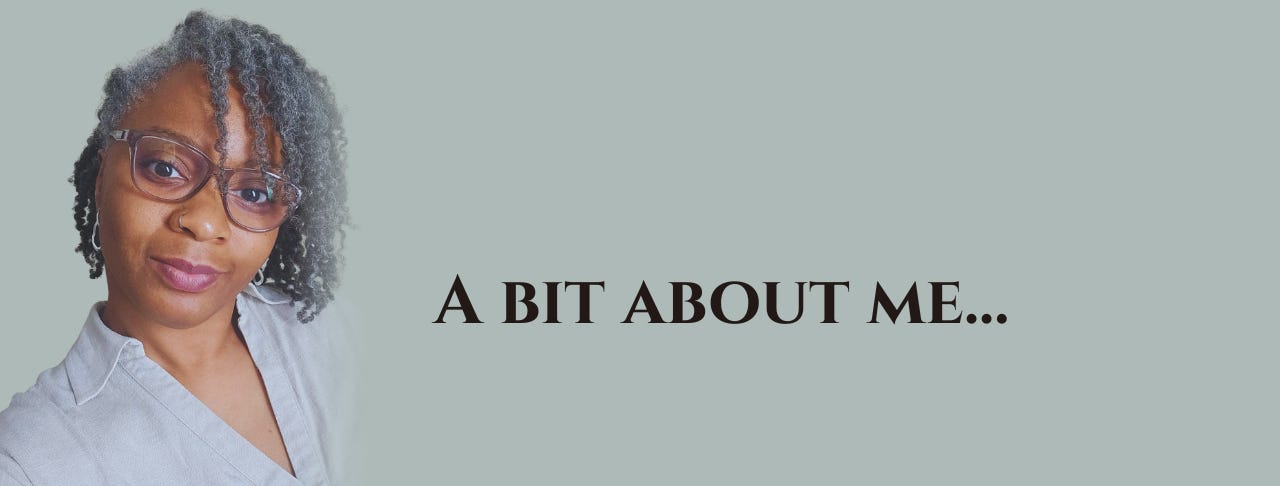
Hi, I’m Florence — mother, writer and creatrix exploring what it means to live, create and lead from increasing coherence rather than self-abandonment.
Through my writing, podcast, 1:1 threshold work, Human-Centred Experience Design and the Embodied Living Circle, I create spaces that invite honesty, embodiment and deeper self-trust.
My work supports women returning to themselves through lived experience — learning to trust what they notice, remain in relationship with themselves while becoming, and create from a place that feels inhabitable from the inside.
Alongside threshold support for women navigating visibility, transition and identity shifts, I also support women in creating containers, learning spaces and experiences that feel like an extension of who they actually are.
If something in this work resonates deeply, you’re welcome to explore my Work With Me page or reach out directly.
Florence, I saw so much of myself in this article. You were able to give eloquent words to something I have been feeling for so long, but did not have the words to express. Thank you. I saved this article as something to revisit for clarity.
This Florence, T H I S! This piece is everything!